
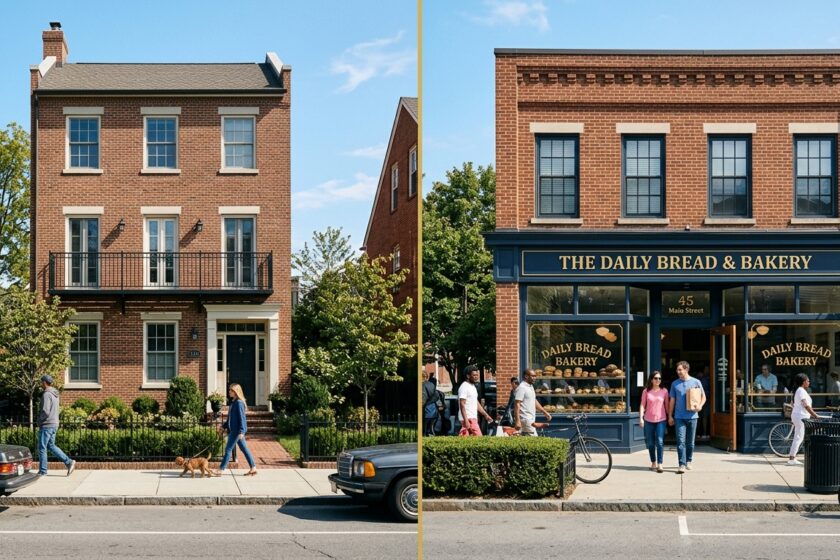
Diversifying Your Portfolio Across Residential and Commercial Assets
Diversification is a familiar concept in traditional investing, and it applies just as directly to real estate. Residential and commercial assets respond to different demand drivers, different economic cycles, and different tenant behavior, which means a portfolio blending both can be more resilient than one concentrated entirely in a single asset class.
Residential real estate — particularly workforce and mid-market housing — tends to be relatively defensive, since housing is a basic need that people prioritize even during economic downturns. Commercial real estate, by contrast, often has more direct exposure to broader business cycles, since retail, office, and industrial demand are tied closely to consumer spending and corporate activity. That difference in sensitivity is exactly what makes blending the two valuable.
Diversification also applies within each category. Within residential, single-family and multifamily assets carry different risk and management profiles. Within commercial, retail, industrial, and storage each respond to different demand drivers, as outlined in our commercial market outlook piece. A thoughtfully diversified portfolio considers this second layer, not just the residential-versus-commercial split at the top level.
For investors building a portfolio with Steve Ford across multiple divisions — Residential, Commercial, and Luxury Homes — this diversification happens naturally as the relationship grows, giving investors exposure to different demand drivers within a single, professionally managed platform rather than needing to independently source and underwrite each asset class themselves.