
Understanding Cap Rates: What International Investors Need to Know
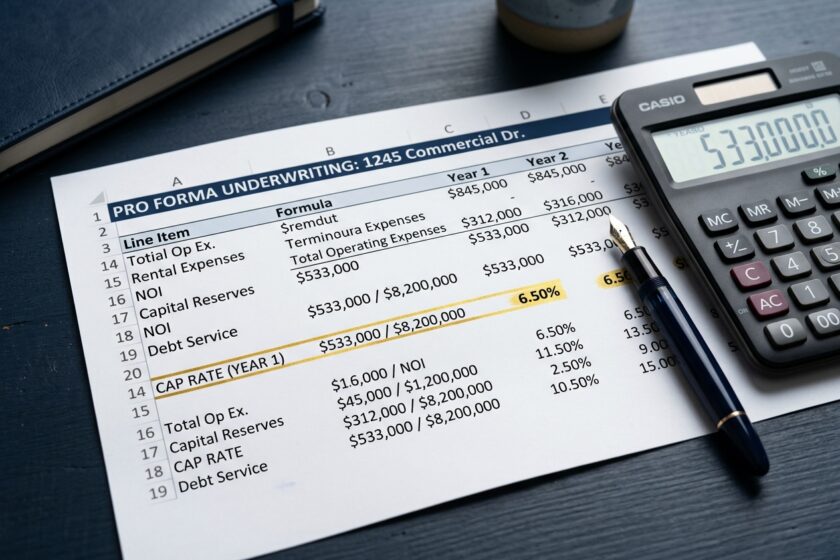
Few terms get thrown around as loosely or misunderstood as often as the capitalization rate. At its core, a cap rate is simple: it is a property’s net operating income divided by its purchase price, expressed as a percentage. A property that generates $80,000 in net operating income and sells for $1,000,000 has an 8% cap rate. But the number only tells part of the story, and international investors evaluating U.S. deals should understand what sits behind it before comparing opportunities.
The first thing to understand is that cap rates move inversely to price. A lower cap rate generally means investors are paying more for each dollar of income, which typically reflects lower perceived risk — a stabilized asset in a strong submarket, for example. A higher cap rate usually signals either more risk, more upside, or both, such as a value-add property that needs renovation or repositioning before it reaches its full income potential.
Cap rates also vary meaningfully by asset class, market, and even neighborhood within the same city, so a ‘good’ cap rate in one context can be a red flag in another. Comparing a suburban single-family portfolio to a downtown mixed-use asset on cap rate alone, without accounting for growth trajectory, tenant quality, and capital expenditure needs, is one of the most common mistakes we see from investors evaluating deals from overseas.
At Steve Ford, every opportunity we bring to investors includes a full underwriting package that goes well beyond a single cap rate figure — rent comparables, expense assumptions, capital plan, and exit scenarios are all laid out so you can evaluate the investment on its full merits, not a single ratio.