
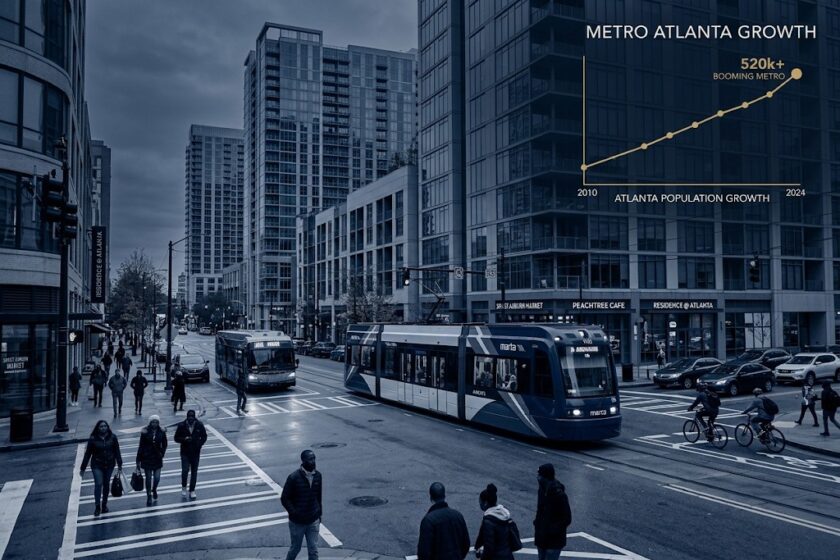
Atlanta’s Population Growth and What It Means for Housing Demand
Population growth is the single most reliable long-term driver of housing demand, and Atlanta’s trajectory on this front has been remarkably consistent. The metro has added residents at a pace that outstrips most of its peer markets, fueled by corporate relocations, a growing base of remote and hybrid workers choosing Atlanta for its cost of living, and steady in-migration from higher-cost metros in the Northeast and West Coast.
Every new household that arrives needs somewhere to live, and the composition of that demand matters. Atlanta’s growth has been broad-based across income levels and household types — young professionals, growing families, and retirees are all contributing to demand across different housing segments, from urban apartments to suburban single-family rentals to active-adult communities.
Housing supply, meanwhile, has struggled to keep pace in many submarkets, particularly in the workforce and entry-level segments where construction costs, land availability, and permitting timelines have not moved as quickly as population growth. That supply-demand imbalance is precisely the dynamic that supports rent growth and occupancy stability for well-positioned residential investments.
At Steve Ford, we track migration and permitting data at the submarket level, not just the metro level, because Atlanta’s growth is not uniform — some corridors are absorbing far more new demand than their housing pipeline can support, and identifying those pockets early is central to our residential acquisition strategy.